Which wood is best?
It is the first question most clients ask. Here is the honest answer:
Every hardwood we use is built to last generations. The choice between them is about appearance — not durability.
Hardness varies between species, and we will note where it matters. But every wood we offer is a true hardwood, sealed with a finish engineered for daily use. Each will perform beautifully for decades.
The decision, then, is a design decision. And it is one we will make together.
Narrow your options.
Filter by tone, character, or budget. Cards dim as they are ruled out. You do not need to decide here — this is a starting point.
Why are some woods more expensive?
The price difference reflects rarity and visual character — not quality or durability. A maple table and a spalted maple table will both serve your family for generations.
You are paying for distinctiveness, not longevity.
Oil or stain?
The most consequential decision after species is finish. Each wood naturally suits one approach.
Finished naturally.
Some species are best left to show their natural color. Walnut, mahogany, and the figured maples need only an oil-and-varnish finish to reach their full depth.
The patina they develop over years adds to the piece, rather than detracting from it.
Finished with stain.
Other species begin as a more neutral canvas, well-suited for stain. Maple, cherry, and red oak accept color cleanly across the full range — from whitewash to near-black.
This is the right approach when you need to match existing flooring, cabinetry, or furniture.
The most adaptable of the nine.
White oak performs equally well in both directions. Left natural, it reads as soft and refined — well-suited to modern coastal interiors. With a light stain, it becomes an upscale traditional oak. This versatility is one reason it remains among our most-requested species.
How natural processes create one-of-a-kind boards.
Two species earn their character not from the tree itself, but from natural processes that occur within it. Both are finished naturally, and both produce boards that no two tables will ever share.
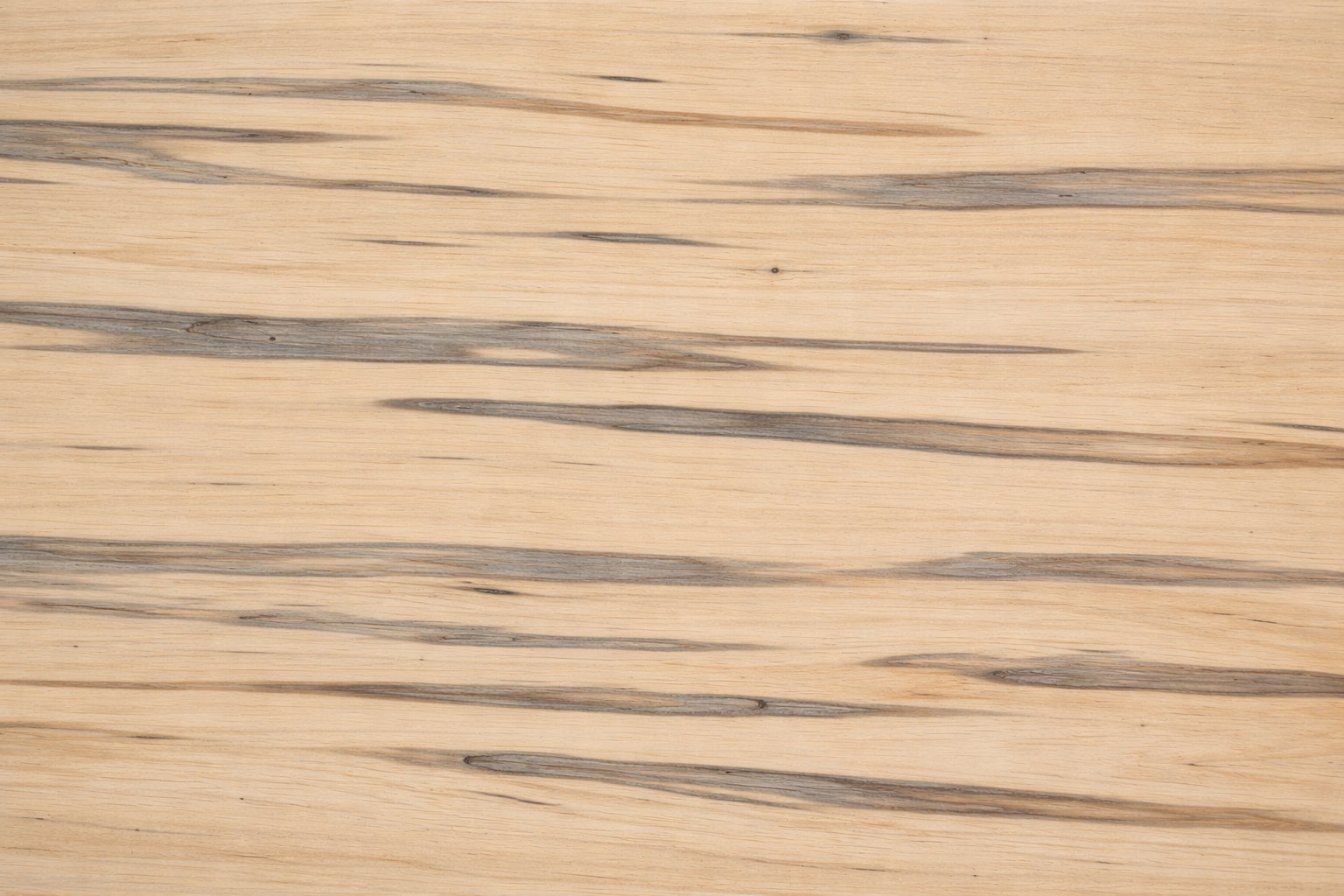
Ambrosia Maple
Cause: The ambrosia beetle and its companion fungus.
When an ambrosia beetle tunnels into a living maple, it carries fungal spores with it. The fungus marks the wood from within without harming the tree. The result is a network of soft gray and brown streaks that follow the grain, sometimes radiating from small entry points.
Because this occurs while the tree is alive and healthy, the wood retains the full strength of any other maple.
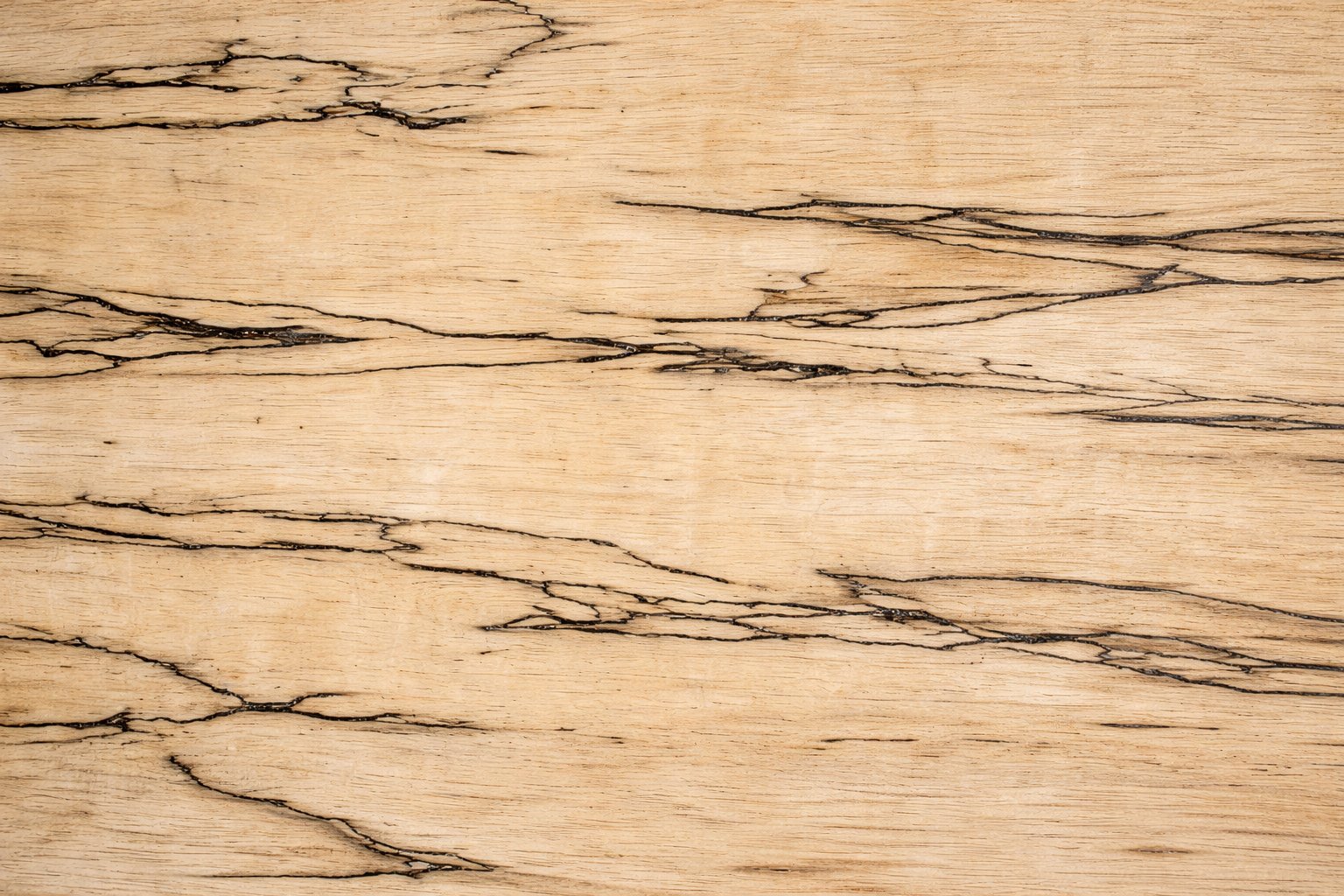
Spalted Maple
Cause: Multiple fungi competing for territory in fallen wood.
Spalting occurs when fungi colonize a fallen or dying maple and draw dark "zone lines" as they compete. The wood is then dried at the right moment to halt the process, preserving the pattern without compromising structural integrity.
The result is a striking, near-architectural pattern — bold, geometric, and impossible to replicate.
What if I'm unsure?
Most clients are. That is expected, and it is part of what the design consultation is for. If you want a starting point, here are the recommendations we make most often:
Stained Maple
Pairs with virtually any interior and gives you full control over color. The most flexible choice we offer.
Walnut
Naturally beautiful, finished simply with oil. Modern, warm, and quietly impressive.
Spalted or Ambrosia Maple
Both are conversation pieces by nature, finished naturally to display their patterns.
White Oak
Finished natural or with a light driftwood stain. The most popular choice in our region.